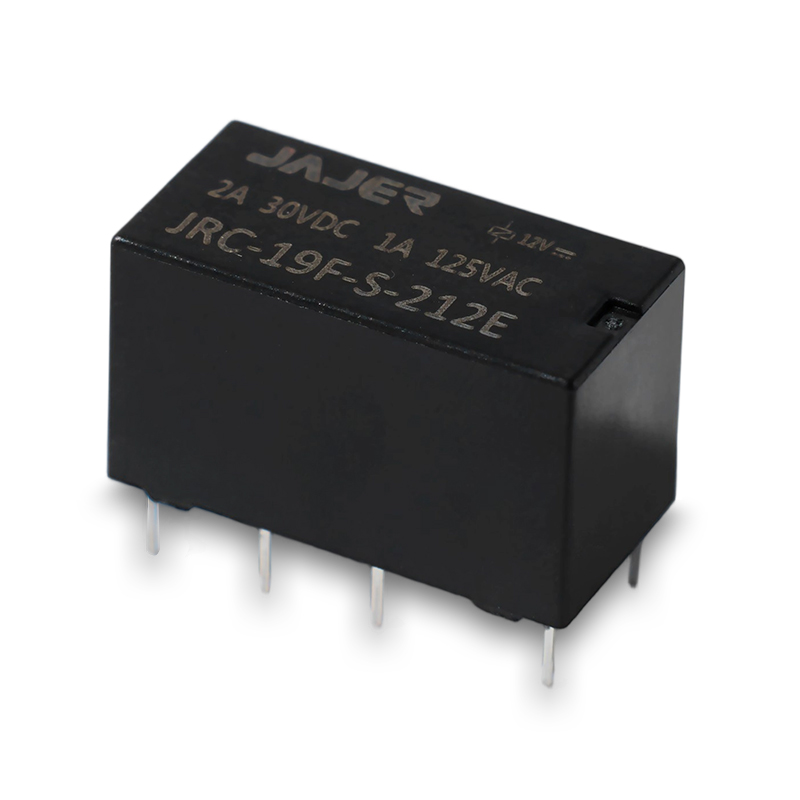
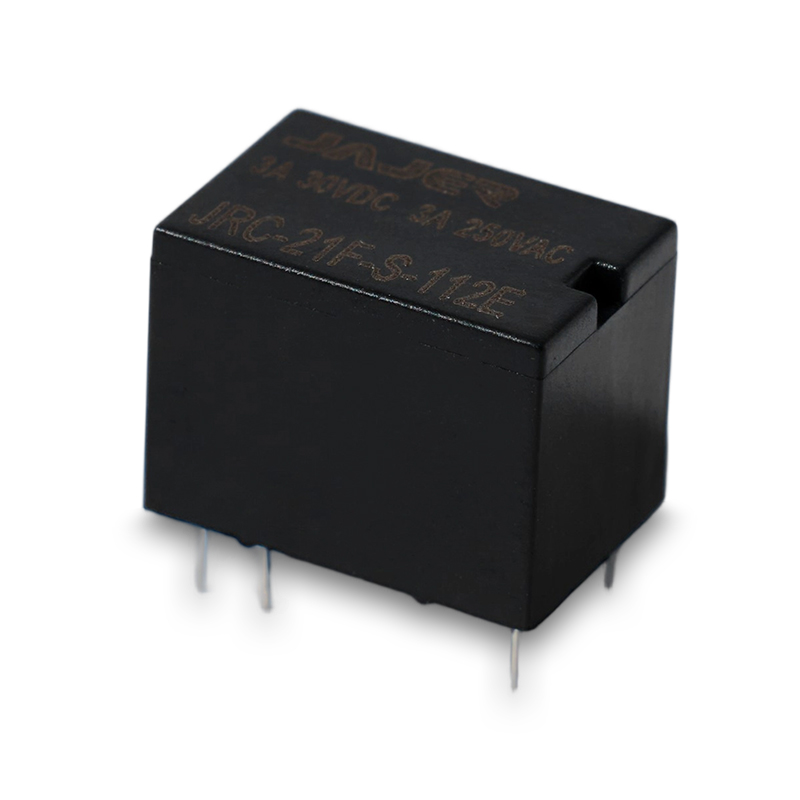
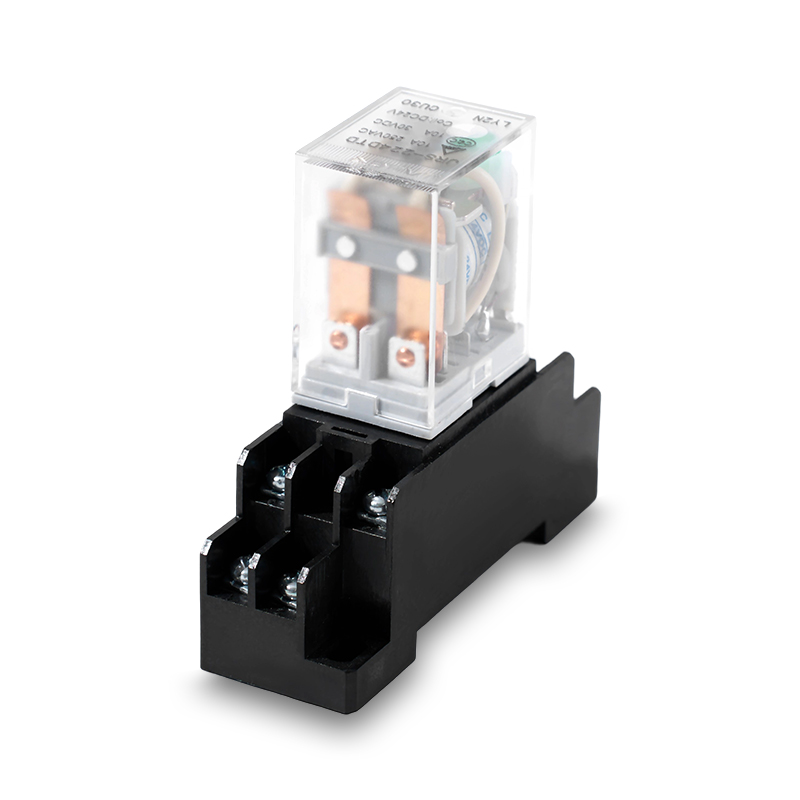
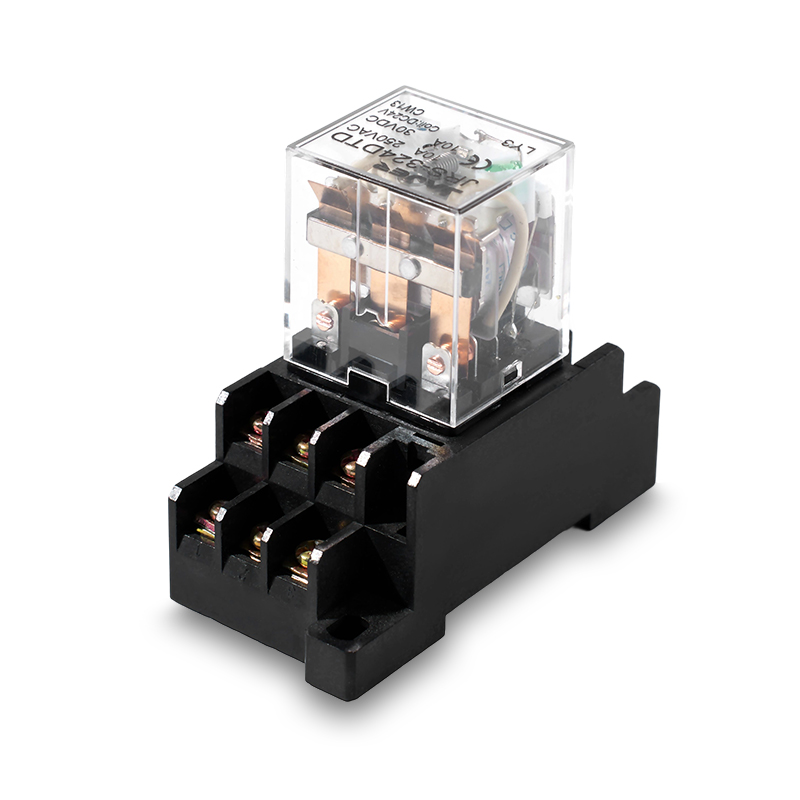
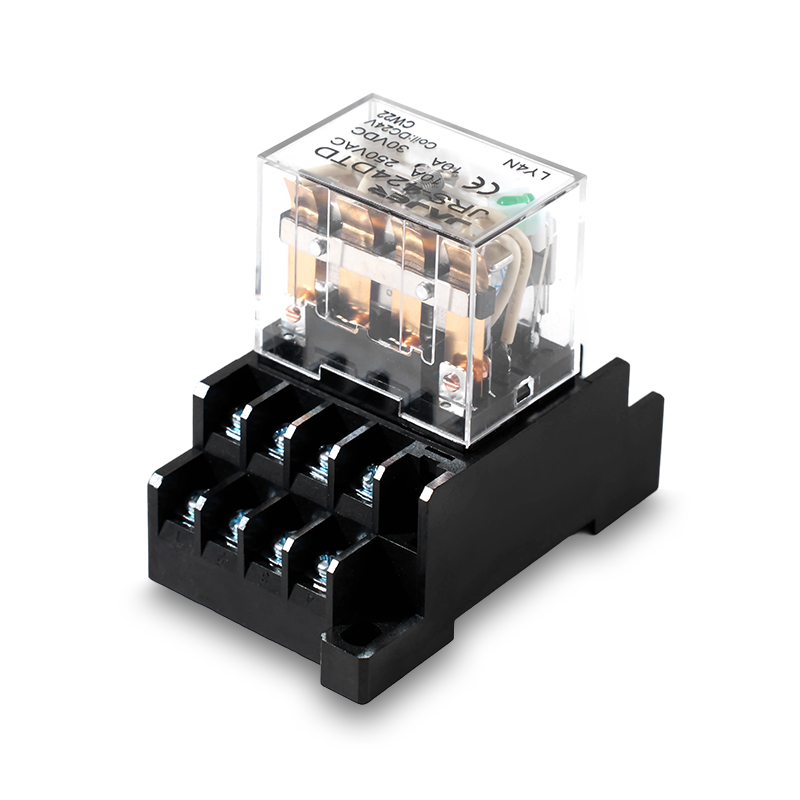
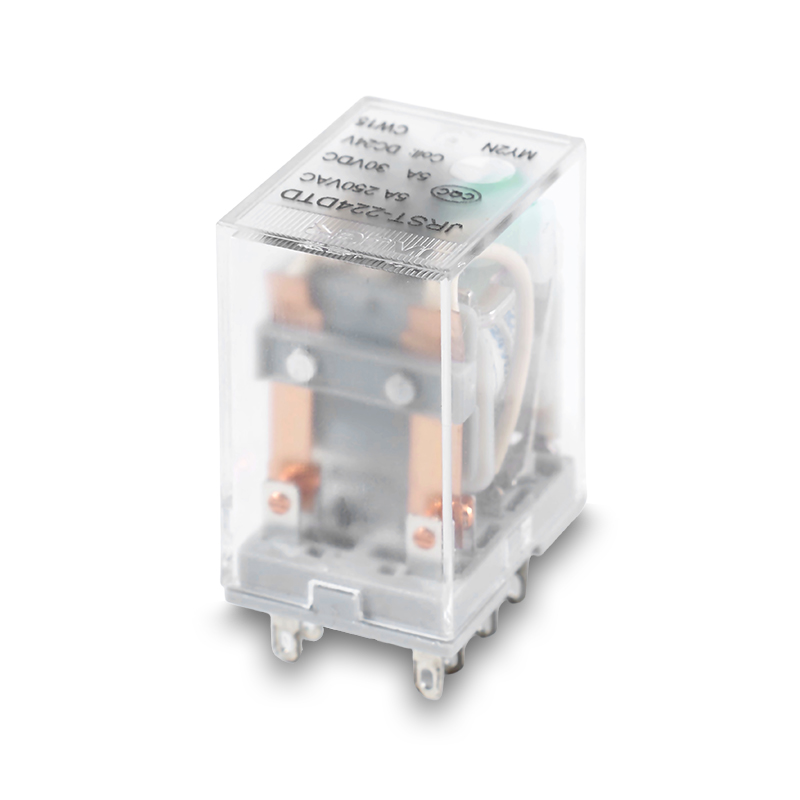
Users frequently ask whether a General Purpose Power Relay can handle switching multiple voltage levels — especially when transitioning from low-voltage control circuits to high-voltage loads. Similar questions arise around an Electrical Control Relay used in automated panels when changing distinct AC or DC voltage systems without causing failure. These concerns come from real discussions on electronics and electrician forums where mixed voltage switching creates uncertainty for beginners and professionals alike.
Switching AC vs. DC Loads: What Changes?
Different voltage types behave differently. An AC load switches polarity 50–60 times per second, while DC remains constant in one direction. Because of this, contact arcing differs:
AC switching: The current naturally passes through zero, which helps extinguish arcs more easily.
DC switching: There’s no zero point, so arcs can persist longer, increasing contact wear.
Relays designed for switching AC loads may struggle with DC loads because of this arc behavior. Many discussions emphasize that using a relay beyond its rated voltage or current type often accelerates degradation of the contacts and reduces lifespan dramatically.
Why Ratings Matter More Than Voltage Alone
Every relay — whether general power or a control device — has specific parameters stamped on its datasheet:
Coil voltage rating: This is the control signal voltage (e.g., 12 VDC, 24 VAC).
Contact rating: The maximum load voltage and current the contacts can handle (e.g., 240 VAC @ 10 A).
Users on electronics forums often misinterpret these values, causing misapplication. For instance, using a relay rated for low-voltage DC to switch high-voltage AC causes contact welding or burnout because the load characteristics differ from design expectations.
Real-World Example from Discussions
A user shared an experience where a relay used to control a well pump failed shortly after transitioning from off-grid solar to grid power, even though nominal voltage seemed similar. When the system was wired directly bypassing the relay, the pump worked fine. This highlights that volts alone don’t tell the whole story — current peaks, inrush loads, and waveform changes matter too.
This kind of user insight reminds designers and technicians that the electrical environment and load behavior play key roles in relay performance.
Selecting a Relay for Mixed Voltage Systems
When choosing a relay intended to handle different voltages, several practical factors should be considered:
Match Contact Ratings to Actual Load Conditions
Always choose a relay contact rating that exceeds the highest actual voltage and current you expect to encounter. Don’t assume voltage compatibility if current or waveform type is different — both parameters count.
Consider Type of Load
Resistive loads like heaters are easier on relay contacts than inductive loads like motors. Inductive loads cause high inrush currents and contact arcing, which can quickly degrade contacts if the relay isn’t rated for it.
Environmental and Thermal Conditions
Poor ventilation or high ambient temperatures accelerate wear. Relays in hot cabinets or dusty environments degrade faster, so choose devices with appropriate environmental protection.
Can a Single Relay Switch Multiple Voltages Safely?
The short answer is: Yes — but only when it’s correctly rated for each type of voltage and load condition.
A properly selected relay with appropriate contact ratings can switch both lower and higher voltages as part of a control system. For example, a machine panel might use a relay to convert a 24 V control signal into switching at 240 VAC. This is standard practice in control engineering — but it only works reliably if the relay’s contact and coil ratings are designed for both roles.
However, swapping between AC and DC with the same device without checking ratings can be risky, and users often report unexpected failures when done incorrectly.
Tips from Technical Discussions
From multiple online Q&A threads and troubleshooting conversations, three key takeaways emerge:
Don’t assume interchangeable voltage use: Just because a relay can switch one voltage doesn’t mean it can handle another without adjustment or a different model.
Understand the load type and waveform: AC and DC behave differently, and relays rated for one type may struggle with the other.
Simulation and testing help: When in doubt, simulate the expected load conditions or test with a safety margin to avoid failure.
Can a General Purpose Power Relay switch different voltages? Yes — but only when its specifications match the expected load and electrical environment. Similarly, proper use of an Electrical Control Relay in mixed voltage systems depends on careful selection and understanding of contact ratings, load types, and environmental stresses.
At Wenzhou Jiajie Electric Co., Ltd., experienced engineers emphasize correct specification and validate real-world conditions before finalizing relay selection — a practice that minimizes unexpected downtime and increases system reliability.




 English
 русский
 Español