English
 русский
 Español
Home / News / Industry News / Industrial Control Relay Selection Shifts Toward Reliable PLC and Panel Integration
Industrial Control Relay applications are becoming more closely tied to practical control-panel requirements as manufacturers upgrade automation equipment and replace aging electrical components. Recent industry discussions are placing more attention on PLC interfaces, inductive loads, cabinet space, maintenance access, and dependable switching rather than relay specifications viewed in isolation.
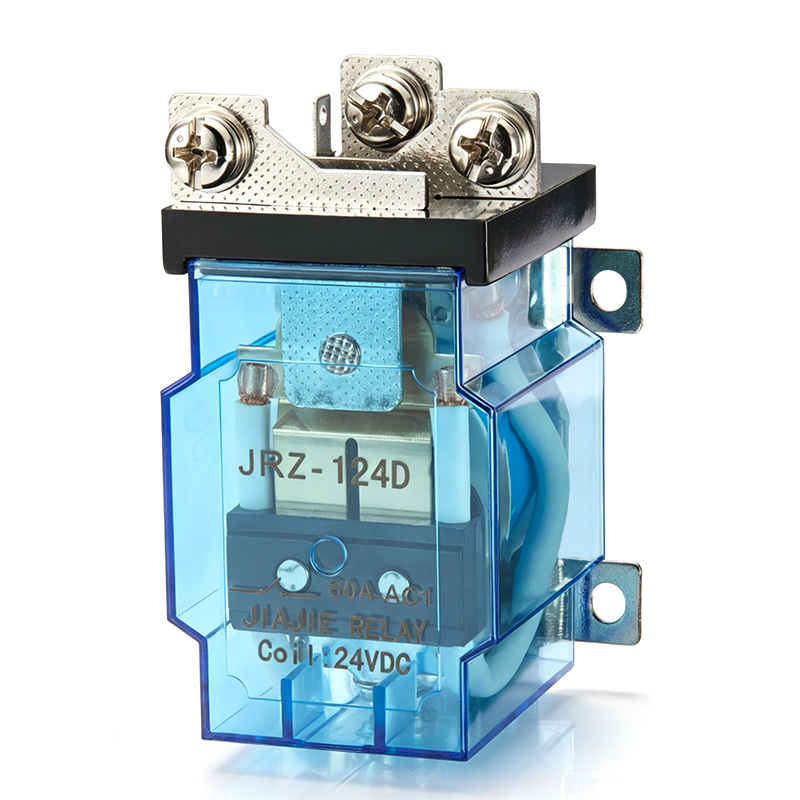
A common sourcing mistake is selecting a relay mainly from its rated current. Engineers also need to consider whether the relay will switch a resistive, inductive, or capacitive load, together with operating voltage, inrush current, switching frequency, and expected electrical life. For motors, contactor coils, and solenoid valves, the switching conditions can differ considerably from simple signal circuits.
Many modern control cabinets use 24V DC control circuits, making coil compatibility an important specification for an industrial relay for PLC control. The relay coil should match the PLC output and control power supply, while the contact side must be suitable for the connected load. Separating the PLC signal from the external circuit can also simplify system design and reduce direct electrical stress on controller outputs.
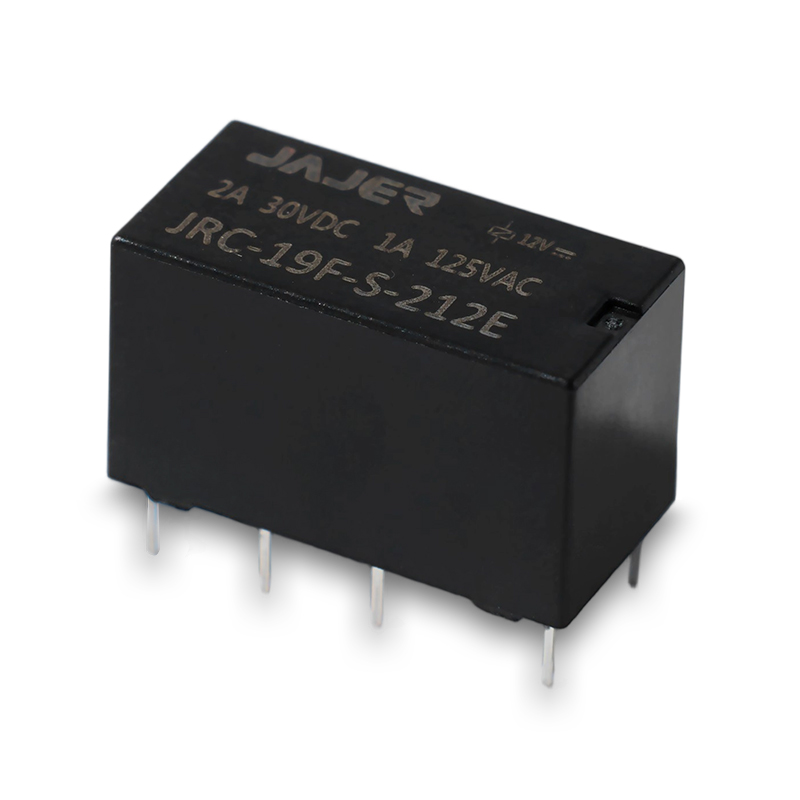
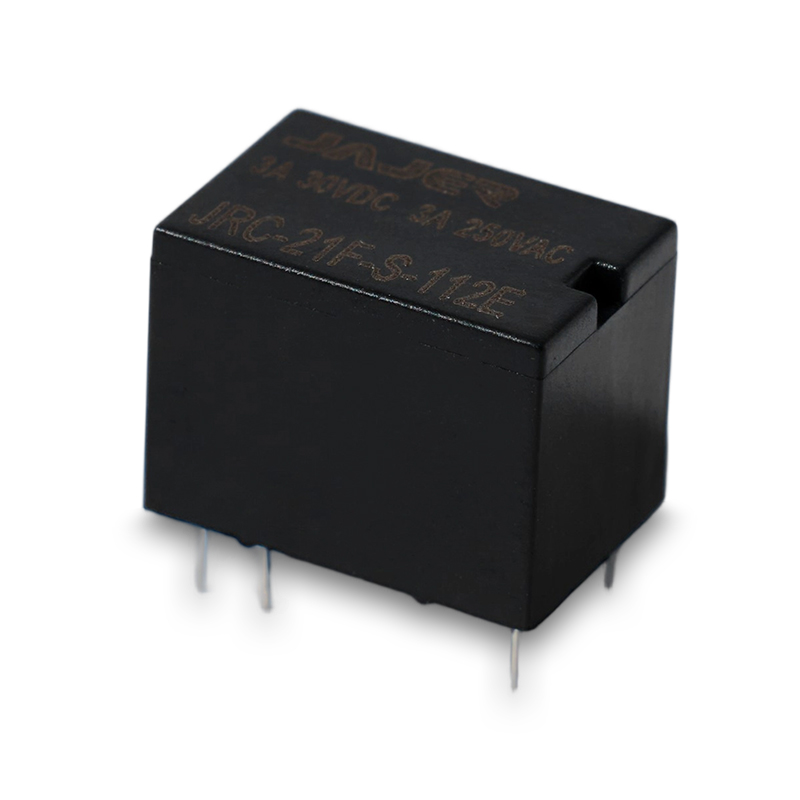
NO, NC, SPDT, and DPDT configurations serve different control requirements. Selecting the correct contact arrangement at the design stage can prevent unnecessary wiring changes during installation. For machine builders and panel manufacturers, the following details deserve particular attention:
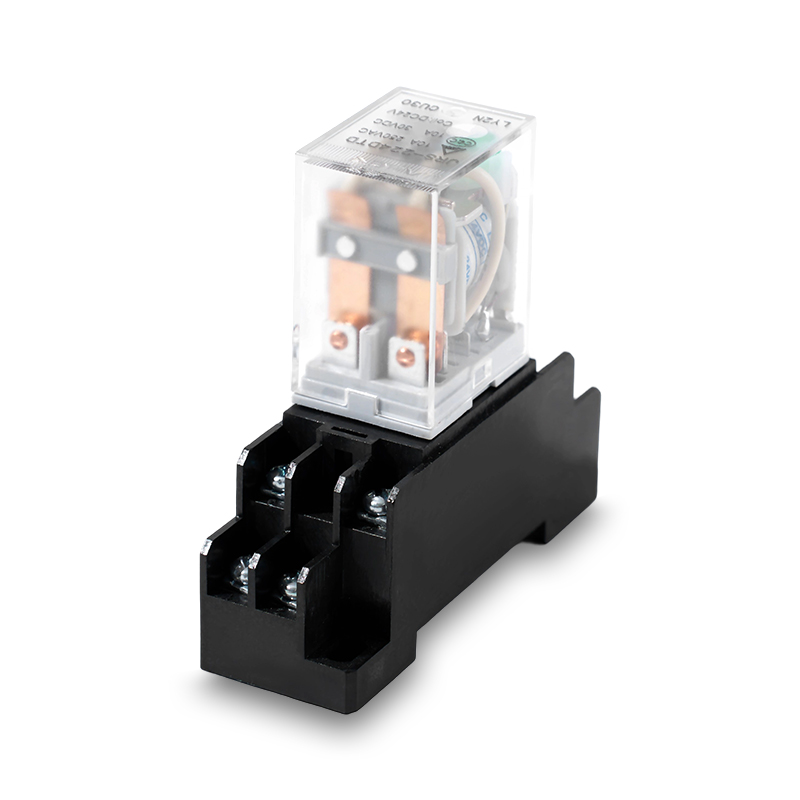
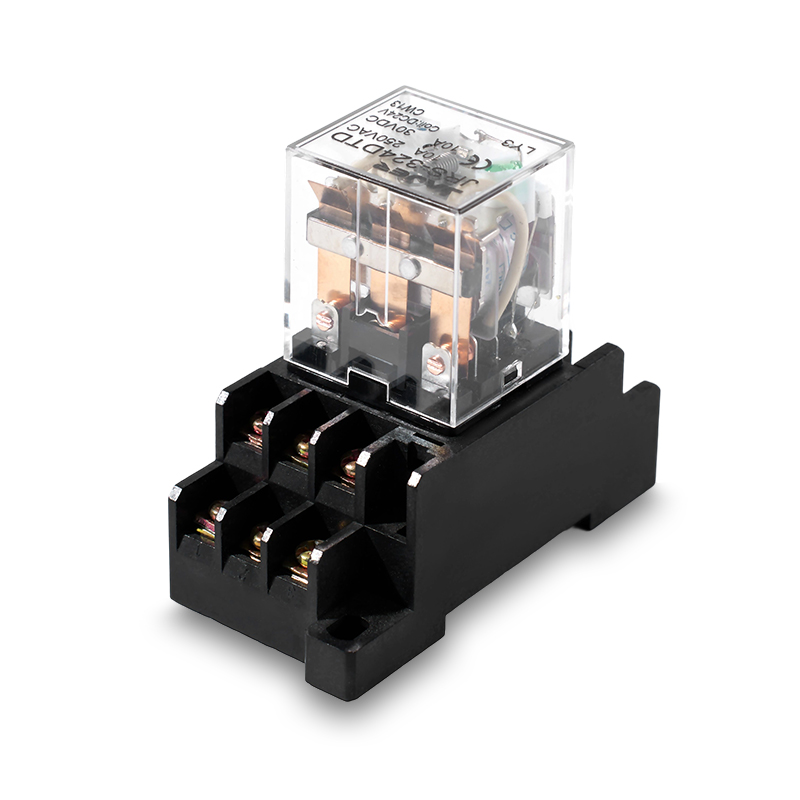
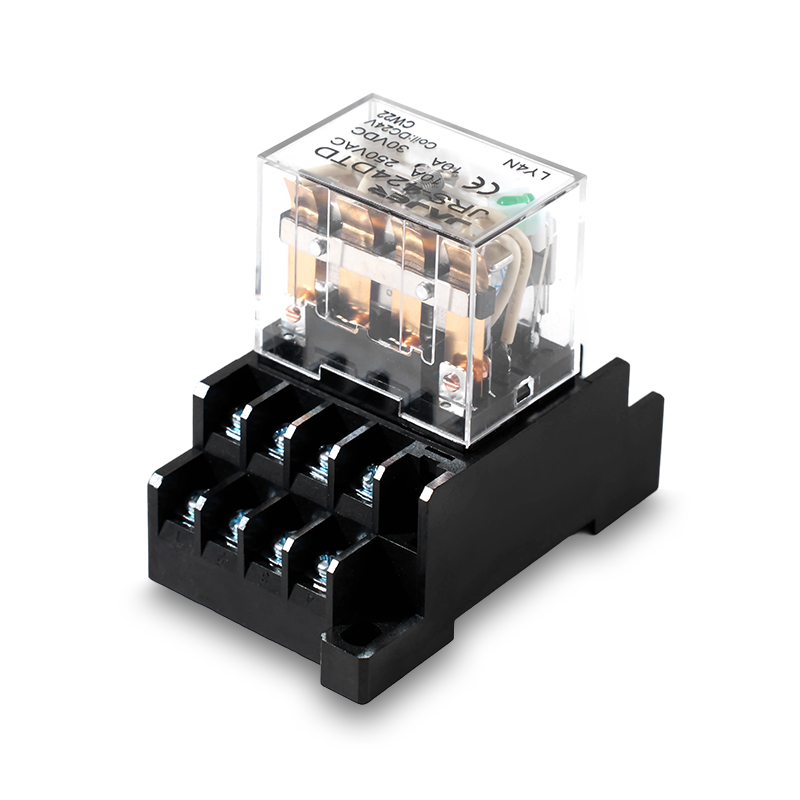
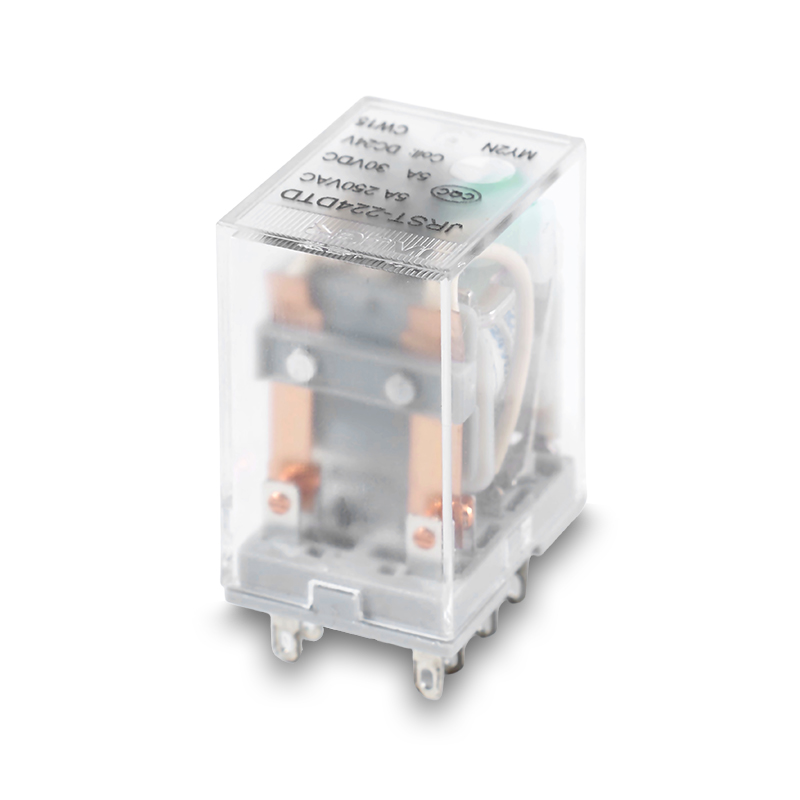
Relay selection also influences control cabinet layout. DIN rail mounting and plug-in socket designs can make replacement more convenient, particularly when several relays are installed together. Clear terminal identification, accessible wiring, and optional visual indicators can help maintenance personnel locate a failed control component without removing unrelated equipment. These practical details are increasingly relevant as manufacturers focus on easier maintenance and more structured automation panels.
Inductive loads can create voltage transients when switched off, placing additional stress on relay contacts. Solenoid valves and contactor coils are typical examples. Depending on the circuit, suitable suppression components such as flyback diodes, varistors, or RC networks may be considered. Relay selection should therefore be evaluated together with the complete switching circuit rather than treating the contact rating as an isolated number.
For OEMs, distributors, and control-panel manufacturers, a useful purchasing specification should include coil voltage, contact arrangement, load type, mounting method, switching frequency, environmental conditions, and required certifications. Providing these details to a manufacturer allows the relay design and configuration to be checked against the intended application before production, reducing compatibility issues during assembly.
As automation systems become more interconnected, the value of an Industrial Control Relay lies not only in switching capability but also in predictable integration with PLCs, control cabinets, and field devices. Manufacturers that can support application-specific specifications, socket matching, documentation, and OEM requirements give industrial buyers a clearer path from component selection to stable machine operation. For procurement teams sourcing an Industrial Control Relay, evaluating the complete application and maintenance environment is a practical way to improve component compatibility and long-term control-panel reliability.
Quick Contact
Yueshang Innovation Park, Wengyang Street, Yueqing City, Zhejiang, China
Pages
Products
Stay In Touch
If you have any questions or need help, feel free to contact with our team.

Power distribution electromagnetic relay manufacturers